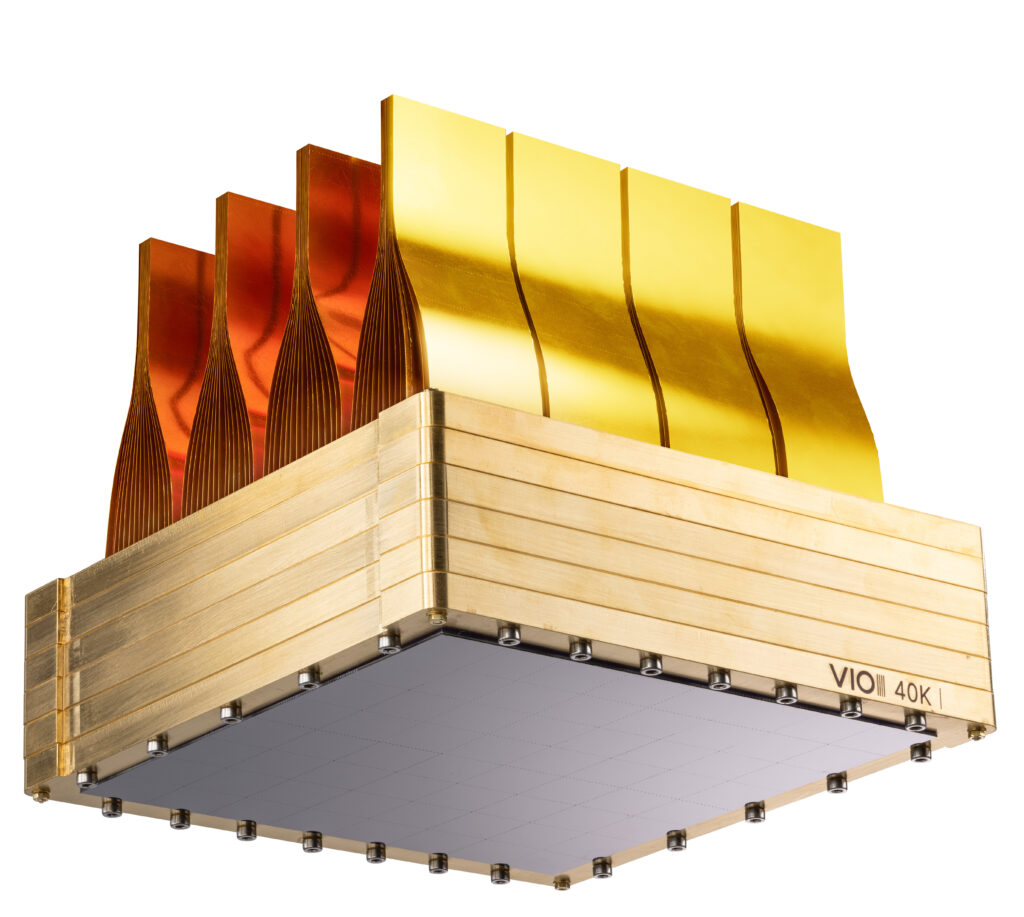
For years, quantum computing has felt like “science fiction that’s always five years away.” But this December, the finish line moved. With the release of the VIO-40K processor, we’ve officially hit the 10,000-qubit milestone. This isn’t just a bigger number; it’s the moment computers stop just “calculating” and start “simulating” reality itself.
What are Qubits?
To understand why this is a big deal, think about a standard computer bit like a light switch: it’s either on or off. If you’re trying to find your way through a maze, a standard computer tries every path one by one until it finds the exit.
A qubit, however, is like a spinning coin. While it’s spinning, it is both heads and tails at the same time. This allows a quantum computer to “see” every possible path in the maze simultaneously. A 10,000-qubit machine doesn’t just work faster; it works in a way that our current laptops physically cannot match them.
What are the applications?
We often talk about “computing power,” but what does that look like in your daily life? Here is how this 10,000-qubit leap will show up in the real world:
• Medicine Built for You: Right now, most medicine is “one size fits all.” With this tech, doctors can simulate how a specific drug molecule will react with your unique DNA on a screen before you ever take a pill. It’s the end of “trial and error” healthcare.
• The Battery Revolution: We’ve been stuck with lithium-ion for a long time. 10,000 qubits allow us to simulate new, “miracle” materials that could lead to smartphone batteries that last a week or electric planes that can fly across oceans.
• Solving the Climate Puzzle: These machines can model the atmosphere and chemical reactions at a molecular level, helping us create ultra-efficient ways to “scrub” CO2 directly out of the air—something current computers find too complex to map.
Search my topics
Recent Posts
- Cosmic Chronicles:Blackholes and Wormhole February 7, 2026
- Cosmic Chronicles:Milky Way Madness February 6, 2026
- Cosmic Chronicles:Legend of Planets February 5, 2026
- New Year 2026 – A new Beginning for all January 1, 2026
- The Abyss: Earth’s great graveyard December 26, 2025
Categories
- All Categories
- All Categories
- Animals and Nature
- Book reviews
- Bubloo Scientist Updates
- Chemistry
- Coding and languages
- Computer Projects
- Food and Nutrition
- Geography
- Historical Science
- History
- Huzaifa's Blogs
- IT
- Mathematics
- Modernized world (New things)
- My business
- My travels
- Physics
- Science and Technology
- Space and Atmosphere
- Sports