Cosmic Chronicles: Milky Way Madness 🌌
Welcome to the ultimate backstage pass to the galaxy we call home—the Milky Way. To begin with, forget boring textbook vibes; this is the wildest cosmic rollercoaster you’ll ever ride. In fact, buckle up, because the Milky Way isn’t just a bunch of stars—it’s a chaotic, glowing, star-studded rave that’s been going on for billions of years.
The Galactic Stage 🎭
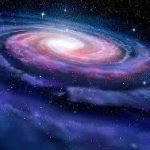
The Milky Way is a spiral galaxy, which basically means it looks like a giant cosmic pinwheel spinning in space. Moreover, it’s about 100,000 light-years wide—translation: if you tried to drive across it at highway speed, you’d still be stuck in traffic for longer than humanity has existed.
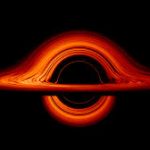
At the center? A supermassive black hole called Sagittarius A*. In other words, think of it as the DJ of the galaxy, pulling everything into its gravitational beat.
Star Power ✨
We’re talking hundreds of billions of stars here. On one hand, some are chill, like our Sun, just hanging out and keeping planets warm. On the other hand, others are absolute drama queens—massive blue giants that burn out fast, exploding in supernovas like fireworks on steroids.
And then there are red dwarfs, the quiet introverts of the galaxy. They’re small, dim, and live forever. Consequently, if stars were people, red dwarfs would be the ones sipping tea while everyone else is losing their minds at the party.
Nebulae: Cosmic Graffiti 🎨
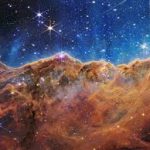
Nebulas are the Milky Way’s art installations—giant clouds of gas and dust that glow in insane colors. In addition, they’re basically star nurseries, where new stars are born.
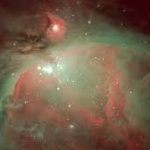
- Orion Nebula: A baby factory for stars, glowing like a neon sign.
- Eagle Nebula: Home of the famous “Pillars of Creation,” which look like massive cosmic skyscrapers.
- Lagoon Nebula: A swirling mess of pinks and purples, like the galaxy spilled paint all over itself.
Altogether, nebulas are proof that the universe has a flair for drama and aesthetics.
Galactic Neighborhood 🏠
Our solar system is chilling in one of the Milky Way’s spiral arms—the Orion Arm. As a result, it’s like living in a quiet suburb compared to the chaos near the galactic center.
But don’t get too comfy. Eventually, the Milky Way is constantly moving, colliding, and reshaping. In about 4 billion years, we’re scheduled for a cosmic mashup with the Andromeda Galaxy. Therefore, imagine two galaxies crashing together—stars flinging around, black holes merging. It’s going to be the ultimate space mosh pit.
Hidden Monsters 👾
Besides the central black hole, the Milky Way is crawling with smaller black holes. In fact, they’re invisible, lurking like cosmic ninjas, waiting to swallow anything that gets too close.
And then there’s dark matter—the mysterious stuff that makes up most of the galaxy’s mass. Put simply, we can’t see it, can’t touch it, but it’s there, holding everything together like invisible duct tape.
Cosmic Fireworks 🎆
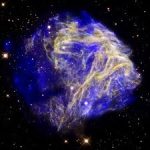
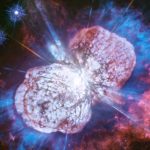
Supernovas are the Milky Way’s way of saying, “Go big or go home.” Specifically, when massive stars die, they explode with enough energy to outshine entire galaxies for a short time.
These explosions scatter heavy elements—like iron and gold—across space. Interestingly, the gold in your jewelry was literally forged in a star’s death scene.
Why It’s Madness 🤯
The Milky Way isn’t just a calm, starry sky—it’s chaos wrapped in beauty. Indeed, stars are born, live wild lives, and die spectacularly. Nebulas paint the sky, black holes lurk in shadows, and the whole galaxy spins like it’s late for class.
Most importantly, the craziest part? We’re inside it. Every night when you look up, you’re staring at the biggest, most insane show in the universe—and you’ve got front-row seats.
Final Thought 🌠
The Milky Way is more than a galaxy—it’s a living, breathing cosmic saga. Ultimately, it’s messy, it’s beautiful, it’s terrifying, and it’s ours. Call it madness, call it magic, but one thing’s for sure: the Milky Way is the ultimate reminder that the universe doesn’t do boring.
Search my topics
Recent Posts
- Cosmic Chronicles:Blackholes and Wormhole February 7, 2026
- Cosmic Chronicles:Milky Way Madness February 6, 2026
- Cosmic Chronicles:Legend of Planets February 5, 2026
- New Year 2026 – A new Beginning for all January 1, 2026
- The Abyss: Earth’s great graveyard December 26, 2025
Categories
- All Categories
- All Categories
- Animals and Nature
- Book reviews
- Bubloo Scientist Updates
- Chemistry
- Coding and languages
- Computer Projects
- Food and Nutrition
- Geography
- Historical Science
- History
- Huzaifa's Blogs
- IT
- Mathematics
- Modernized world (New things)
- My business
- My travels
- Physics
- Science and Technology
- Space and Atmosphere
- Sports